One Plot of Land, Several Owners: Why a Certificate Does Not Guarantee Clean Title
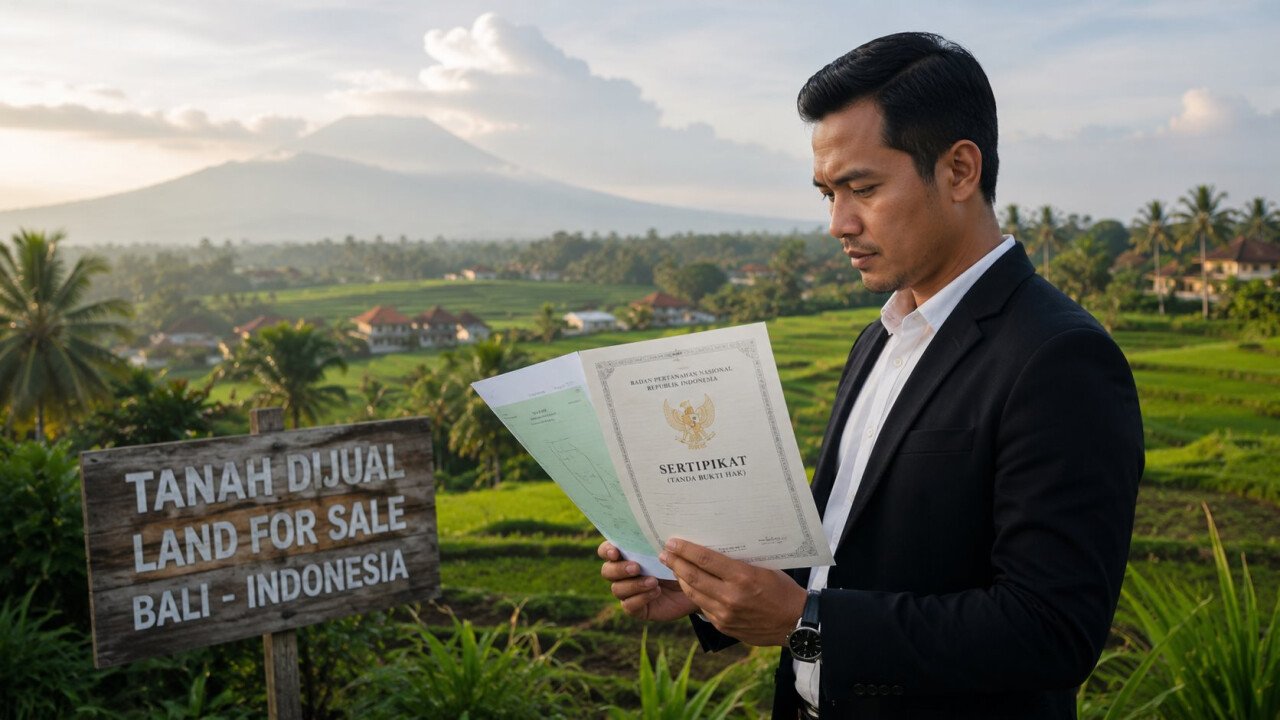
In Indonesia, money is lost not only on construction but also on land. A property can be built, paid for, and even sold, yet a dispute over the right to the plot remains a risk. Let us look at why a certificate on its own does not protect the buyer and what to check before the deal.
A Land Certificate Is Strong Evidence, but Not Absolute
Land rights are registered with the National Land Agency (BPN, now the Ministry of ATR/BPN), and the owner receives a certificate. But registration in Indonesia is built on a negative publication system with a positive tendency (sistem publikasi negatif bertendensi positif): the state does not guarantee that the recorded data is absolutely correct.
This is set out directly in PP 24/1997 on land registration (amended by PP 18/2021). Under Article 32, the certificate is "strong" evidence of the physical and legal data of a plot, but not the only or indisputable one. Until proven otherwise, the data is presumed correct. If the other party proves otherwise, the court may declare the certificate invalid.
There is a mitigating provision, Article 32 ayat (2): if the plot has been held by the certificate holder for five years, acquired in good faith, and no one has raised a claim, the right is harder to challenge. This is the principle of losing a right through prolonged inaction. But courts apply it inconsistently: good faith is hard to prove, and some judges hold that the right to sue is not limited by any time period at all.
Where a "Second Owner" Comes From
Double certificate (sertifikat ganda). Two or more certificates exist for a single plot due to historical registration errors, overlapping boundaries, duplicate records, or abuse. In court, such cases come down to which title was issued earlier and on what grounds. Even a later good-faith buyer can lose.
Claims from the community or former owners. Land may have been used without full formalization of rights, passed on within a community, or registered with violations. Once construction begins, such claims become active. The court looks not only at the paperwork but also at actual possession, the history of use, and the good faith of the parties.
Boundary discrepancies. The cadastre is not perfectly synchronized: the coordinates in the documents may not match the position on the ground. A "document versus reality" conflict is resolved in court, and there is no predictability here.
A neat set of documents and a "trusted notary" do not equal clean title. A certificate confirms an entry in the register, but not the absence of an earlier title, a dispute, an encumbrance, or a defect in the history of transfers.
Conclusion
In Indonesia, land remains one of the main sources of legal risk in a transaction, and it is the buyer who is responsible for the checks. Carry out a land certificate check or a full due diligence procedure to make sure you are buying land, not problems.
We check the plot's history, title, and encumbrances before the deal and handle due diligence, so that you buy land with a clean right. Not sure the title is clean? Contact us before you pay a deposit.
I Gusti Ayu Bitari Karma Gita
Legal Department Expert, Legal Indonesia