Buying Property in Bali, Indonesia: How the Transaction Works and Where the Risks Are
A foreigner can buy a villa in Bali, but cannot hold it under the same ownership title as Indonesians do. The buyer needs to choose a permitted form of ownership, check the property and the seller, and go through a five-stage transaction: from selecting the plot to registering the right. The main risks come from nominee schemes, unverified documents and deposits paid before the legal check. This article explains how to buy property in Bali and what pitfalls to expect at each stage.
What Foreigners Can Buy in Indonesia
Foreigners cannot fully own land under an SHM certificate (Sertifikat Hak Milik, freehold) on equal terms with Indonesians. The law provides other types of rights for foreigners. Whether Hak Pakai (right of use) is available depends on the buyer's status, the type of land plot and the requirements of the law.
In Bali, a foreigner can buy a house priced at no less than 5 billion rupiah or an apartment priced at no less than 2 billion rupiah — the minimum prices are set by ATR/BPN Ministerial Decree (Kepmen) No. 1241/SK-HK.02/IX/2022. A house on land is also subject to the limit in Permen ATR/BPN 18/2021 (Art. 186): one plot per person or family and no more than 2000 m²; more is allowed only with special permission from the minister.
Foreigners can buy apartments — satuan rumah susun — a separate unit in a multi-unit building. Whether the title can be registered depends on the type of land under the building, the buyer's status and the requirements for foreign ownership.
An investment or commercial property is usually held through a PT PMA, an Indonesian company with foreign capital. The third option is Hak Sewa (leasehold), a long-term lease of a property or a land plot.
That is why the familiar "find a property — sign a contract — get a certificate" sequence gains two extra decisions: what right the buyer will receive and in whose name it will be registered. The structure of a specific transaction depends on the purpose of the purchase, the buyer's status, the land category, zoning, building documents and other conditions.
The three main ways for foreigners to hold property:
Hak Pakai
This is a right to use land that can be registered to a foreign national. On state land and HPL land it is granted for up to 30 years, with an extension of up to 20 years and a renewal of up to another 30 years; Hak Pakai on Hak Milik land is granted for up to 30 years and renewed by a new deed (PP 18/2021, Art. 52). Hak Pakai is time-limited tenure, not an equivalent of Hak Milik, so before buying a house you need to check the basis on which the right arose, its term and the conditions for extension.
Leasehold (Hak Sewa)
This is a lease of land for building a villa in Indonesia or another property for an agreed term. The foreigner is the lessee. It is usually a lease agreement rather than a registered property right, so the scope of the lessee's rights is defined by the agreement itself. When the term expires, the lease ends and the house has to be vacated. That is why the agreement must set out the conditions for extension and the procedure for handing over the property.
PT PMA
This is an Indonesian company with foreign capital that can, among other things, own real estate. In this case, the owner of the property is the legal entity. Before registering the plot, you need to check whether the property fits the company's purposes and business activities.
Form of ownership | Term and extension | Registered to | Main risk |
Hak Pakai | Up to 30 + 20 + 30 years (state land/HPL); on Hak Milik land — up to 30 years with renewal | The foreigner | Restrictions related to status and property |
Leasehold (Hak Sewa) | Per the agreement, usually with an option to extend | The foreign lessee | Agreement terms and extension |
PT PMA | HGB (Hak Guna Bangunan, SHGB certificate) up to 30 years + extension | The Indonesian company | Company upkeep: costs and reporting |
Before choosing how to hold the property, check not only the property itself but also your immigration status. For long stays there is, for example, the Second Home visa. The types of KITAS and what each one offers are covered in a separate guide: KITAS in Indonesia: what it is, types and how to get one in Bali
Risk: Nominee Scheme
When looking for a way to own property, a foreigner may be offered to register the land in the name of an Indonesian acquaintance: the seller is paid an agreed sum, and an additional agreement is signed as "security". The scheme looks convenient, but it is illegal. By law, such transactions are null and void: the money paid to the seller cannot be recovered, and the land passes to the state (UUPA, Art. 26(2)).
How nominee schemes end: Nominees: another reason foreigners lose property in Bali
How a Purchase Transaction Works: 5 Stages
Stage | Document | Who is involved | Timeframe |
Property selection | Certificate, property documents, zoning data | Buyer, seller, agent, legal specialist | A few days |
Due diligence | Certificate, tax documents, PBG (persetujuan bangunan gedung — building permit) / SLF (sertifikat laik fungsi — certificate of fitness for use), corporate documents | Buyer, legal specialist, seller, PPAT (land deed official) / notary | Several weeks |
PPJB and deposit | PPJB (perjanjian pengikatan jual beli — preliminary sale and purchase agreement), proof of payment | Buyer, seller, legal specialist / notary | As agreed |
AJB (deed of sale and purchase) | AJB (akta jual-beli) | Buyer, seller, PPAT (pejabat pembuat akta tanah) | Once the transaction conditions are met |
Registration | AJB, certificate and registration package | PPAT, BPN (badan pertanahan nasional, the land agency), buyer / seller | Depends on the procedure and BPN |
Stage 1. Property Selection and Zoning
At this stage, the main thing is to make sure the property is legally fit for a transaction. If you want to buy an oceanfront villa in Bali, pay special attention to where the plot is located. The closer the property is to the shoreline, the more important it is to check the plot boundaries, land category, zoning, building restrictions and the actual documents.
Request nine documents from the seller or agent:
a scan or copy of the land certificate;
cadastral data and the plot area;
the seller's documents (KTP identity card, etc.);
information on the land's designated use and zoning;
building documents;
tax payment receipts;
information on existing encumbrances;
documents for the access road;
lease agreements, if any.
When agreeing on the price, clarify right away that PPh (pajak penghasilan — income tax on the sale of property) is paid by the seller and that this amount is already included in the price. Otherwise, before the deal the seller may remember PPh and ask to raise the price to avoid a loss.
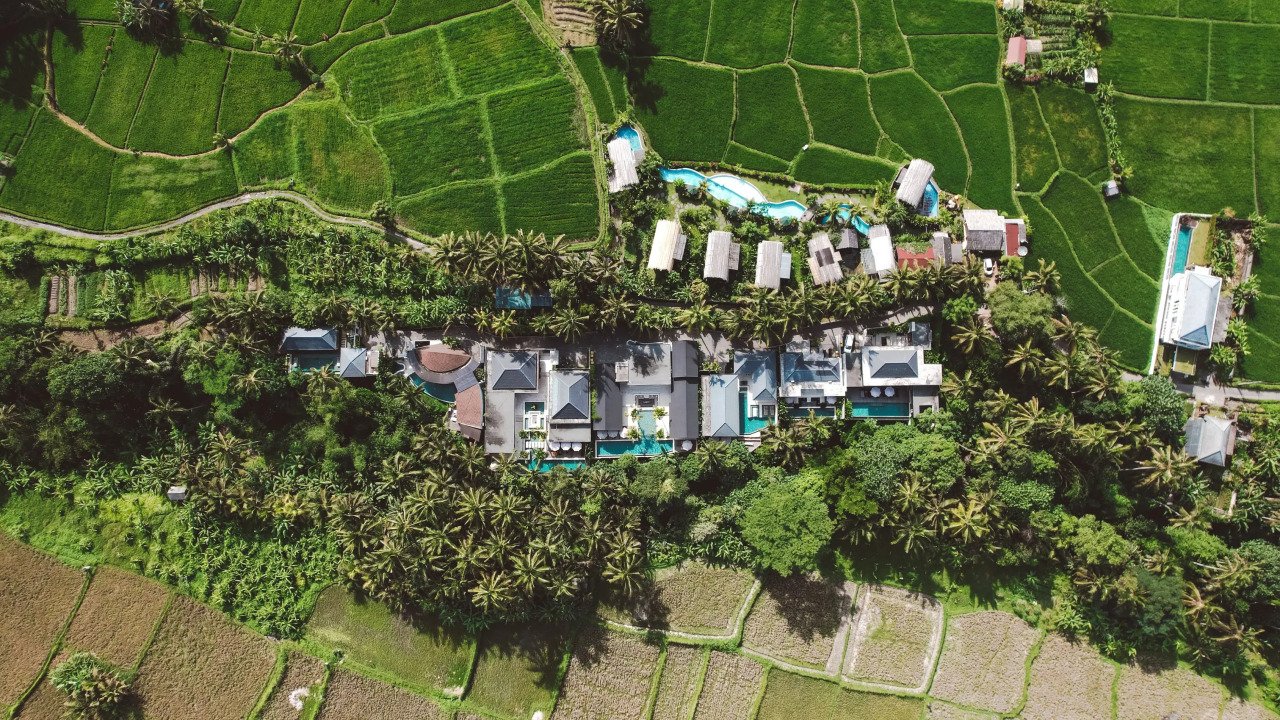
What to check before buying a beachfront villa: the actual plot boundary, the distance to the shoreline, the status of the land between the plot and the water, whether there is public beach access, the legality of the existing building, and whether reconstruction and commercial use are possible.
Risk: a mismatch between the actual use of the land and its permitted use. If this is not checked, it may turn out that the property cannot be used for its intended purpose. A property may be advertised as a ready-made investment villa, but that does not mean the seller holds the full set of required permits. Construction or commercial rental may be prohibited on the plot.
To rent a villa out to tourists, you need a licence and a management company. If the villa is being bought for rental, whether a licence can be obtained is checked before the deal. Which documents confirm that a building is legal is covered in the article PBG and SLF in Indonesia.
Stage 2. Legal Check (Due Diligence)
Once you have chosen a villa, it needs to be checked from a legal standpoint. A specialist will compare the certificate data with the actual property. The owner details, area, plot boundaries and term of the ownership or use right are verified, and possible restrictions are identified.
If the seller is an individual, you need to confirm that they have the right to sell the property. If the owner is a company, the legal specialist checks its documents and the authority of the person entitled to sign. Mortgages, seizures and other encumbrances are checked separately, as are possible tax debts.
If you plan to rent the villa out to tourists, the legal specialist will pay particular attention to zoning and to whether the property has PBG and SLF certificates. If the property is already leased or handed over to a management company, the legal specialist will work out what happens to those agreements after the sale (usually a change of beneficiary).
Risk: a property that looks legally clean may have a hidden problem. Checking a villa in Bali before payment shows its real status. How the check works and why paperwork does not equal clean title.
Stage 3. Preliminary Agreement (PPJB) and Deposit
After agreeing on the price and an initial check, the buyer and seller may sign a preliminary sale and purchase agreement (PPJB). A deposit for the villa — a substantial amount — is usually paid at the same time. That is why the agreement needs to include detailed information: the cadastral number of the property, the certificate number, the total price and payment procedure, the deposit amount, refund conditions, the seller's tax obligations and other important terms. Keep in mind that a PPJB creates contractual obligations between the parties but does not replace the AJB.
Risk: signing the agreement before due diligence. If you sign a PPJB and pay a deposit before the legal check, it will be difficult to get the money back if problems come to light. A legal specialist will help draft an agreement with specific penalty clauses while the money is still with the buyer. What a poorly drafted agreement leads to is covered in the article A property contract that is invalid.
Stage 4. Notarial Sale and Purchase (AJB Before a PPAT)
Once the checks are complete, the parties sign the deed of sale and purchase — the AJB (akta jual beli). It is drawn up and certified by a PPAT (pejabat pembuat akta tanah), an official authorised to execute land transactions. A notary as such does not draw up the AJB: a notary has different functions. In practice, one person often holds both positions — the law allows this — but they sign the AJB specifically as a PPAT.
Before signing, the PPAT checks the certificate with BPN and the parties' document packages, and makes sure the transaction conditions have been met. The buyer should understand in advance exactly which right they are receiving:
a foreign individual cannot obtain Hak Milik (SHM). They are granted Hak Pakai — as a rule, on Hak Milik land under an agreement with the owner; the exact mechanism for transferring the right is determined by the PPAT for the specific property. The property must also meet the requirements for housing for foreigners: minimum price, plot area, designated use;
a PT PMA acquires an HGB (Hak Guna Bangunan) right. Before the deal, the company's corporate structure, its business activities (KBLI) and the signatory's authority are checked.
Taxes are paid before the AJB is signed. The seller pays PPh, and the buyer pays BPHTB (bea perolehan hak atas tanah dan bangunan, a tax on acquiring rights to land and buildings). Without proof that both taxes have been paid, the PPAT does not sign the deed.
Risk: a PPAT's signature does not mean the deal is clean. The PPAT certifies the transaction and checks its formal side but does not carry out full due diligence on the buyer's behalf. Checks of the title, zoning, PBG and SLF permits and commercial risks need to be ordered separately and completed before the AJB.
Stage 5. Registering the Right with BPN
This stage applies to transactions involving a transfer of rights — Hak Pakai to a foreigner or HGB to a company. With leasehold there is no transfer of rights: the land right stays with the owner, and when the lease ends the property returns to them. After the AJB is signed, the documents are sent to BPN to re-register the certificate in the new owner's name. When a house on SHM is bought, Hak Pakai is registered for the foreigner — usually on Hak Milik land under an agreement with the owner. The finished certificate is usually issued within a few weeks or months. When the new certificate is ready, the PPAT collects it and hands it over to the buyer.
Risk: the buyer starts using the property before receiving the certificate. Signing documents before a notary does not automatically mean the registration will succeed and the deal will be completed. It is safer to move furniture into the villa once the original certificate is in hand.
Taxes and Costs in a Purchase Transaction
Financial planning for a house purchase covers more than the price quoted by the seller. Notary and PPAT services, registration and legal support for the transaction are calculated as separate items. PPh is usually 2.5% of the gross transaction value and is paid by the seller. BPHTB is paid by the buyer: the maximum rate is 5%, and the exact rate is set by the local regulation (Perda) of the specific regency.
The main payments in a transaction:
PPh (tax on the sale) — paid by the seller — 2.5% of the gross transaction value;
BPHTB (tax on acquiring rights) — paid by the buyer — up to 5%, rate set by the regency's Perda;
PPAT and notary services, registration, legal support — paid separately, the amount depends on the property.
How to Buy a Villa in Bali from a Developer
Buying a house on the primary market differs from a resale transaction. If you are buying a villa under construction, you need to check not only the property itself but also the developer's reliability.
The names of the selling company and the developer company are compared. Usually they are the same legal entity. Check whether the company has legal rights to the land and whether there are any encumbrances. In the agreement, pay attention to the clauses on project delays, the payment schedule and refund conditions. If the price is below the market average, find out why. This is especially important for presale — sales before construction is complete: the risk of delays and permit problems is higher here.
Risk: the project is delayed or stopped. You pay a significant amount before the villa is built. If the developer acts in bad faith and the agreement protects the buyer poorly, the money will most likely have to be recovered through the courts.
How a Property Legal Specialist Can Help
When a foreigner buys property, legal support matters most before documents are signed and payments are made. A property legal specialist helps break the transaction down into separate legal stages. Depending on the type of transaction and the buyer's wishes, legal support may include the following steps:
determining the suitable form of ownership;
checking the buyer's status;
analysing the certificate and comparing it with the actual property;
checking the seller;
support during negotiations;
land due diligence;
checking zoning, PBG and SLF, and taxes;
searching for encumbrances;
analysing the PPJB;
drafting or reviewing the PPJB agreement;
checking documents before the AJB is signed;
coordinating with the PPAT;
monitoring registration of the transfer of rights;
checking the final documents.
If the buyer needs a preliminary independent assessment of the deal, it is important to have a specialist who represents the buyer's interests. Legal counsel should be involved before the PPJB is signed and a non-refundable deposit is handed over. When buying from a developer, a legal check is needed before signing the booking form and paying the reservation fee. A legal specialist will check the deal before your money reaches the seller.
Want to check a villa purchase you are planning? Contact us — a property legal expert will assess the deal before the money goes to the seller.
FAQ
As an individual, a foreigner cannot register Hak Milik (freehold) in their own name, as is done when the buyer is an Indonesian citizen. Other forms of rights are available to foreigners, such as Hak Pakai, the right of use. A long-term lease (leasehold) or ownership through a PT PMA company is also possible. The right option depends on the purpose of the purchase, the buyer's status, the type of property and the land right.
For residential property, you need to determine which title a foreigner is allowed to hold and meet the relevant requirements. Leasehold gives the buyer the right to use the property for a set term. If the property is bought through a PT PMA, the company's corporate structure and its right to the property are checked. These options differ from the Sertifikat Hak Milik held by Indonesian citizens.
No, a separate KITAS is not required for the purchase. Under PP 18/2021 (elucidation to Art. 69), a valid immigration document is enough for a foreigner: this may be a passport, a visa or a stay permit — a temporary KITAS or a permanent KITAP. In practice, the PPAT or the land office may request additional documents, so it makes sense to clarify the document package in advance.
You can buy a beachfront property, but the plot boundaries, zoning, permits and other aspects need to be checked with particular care. Owning a beachfront villa does not mean it can be used for commercial purposes.
Using a nominee scheme to get around restrictions on foreign ownership is a serious legal violation. If you are offered to register an SHM in the name of an Indonesian acquaintance plus additional documents giving you actual control over the property, read this first: Risks of nominee property ownership in Bali
The time it takes to receive the finished certificate depends on the documents collected, whether a legal check of the property is needed, and the work of the PPAT and BPN. Some land offices are introducing the fast-track PERINTIS service (Peralihan Hak Terintegrasi), in which the whole chain — BPHTB verification, AJB signing and registration — is designed to take 10 working days; check whether it is available at the specific office. Buying a villa through a company, as well as transactions involving additional documents or a property under construction, may take considerably longer.
Whether it can be sold depends on how the property is held. For leasehold, the transfer conditions are usually set out in the lease agreement.
Property held by a foreigner under Hak Pakai can be sold to another foreigner. The buyer must meet the legal requirements and be entitled to acquire such a property. If the villa belongs to a PT PMA under an HGB right, the property itself can be sold to another company entitled to acquire HGB. Another option is to sell a stake in the PT PMA together with the property it owns.
Inheritance is possible, but the procedure depends on the heir's status and the type of right. Under PP No. 18/2021 (Art. 69), if the heir is also a foreigner, requirements for immigration documents apply to them. More on inheritance: Inheriting assets in Indonesia.
The total cost of a villa is made up of the property price, taxes and additional expenses. These include BPHTB (up to 5%), PPAT and notary services, legal support, registration and possible bank fees. The seller is responsible for paying the 2.5% PPh, but you need to make sure the price they quoted already accounts for this tax. The exact calculation depends on the specific property and local rules.